

New psychology lab-based capstone supports research growth at Tennessee Tech
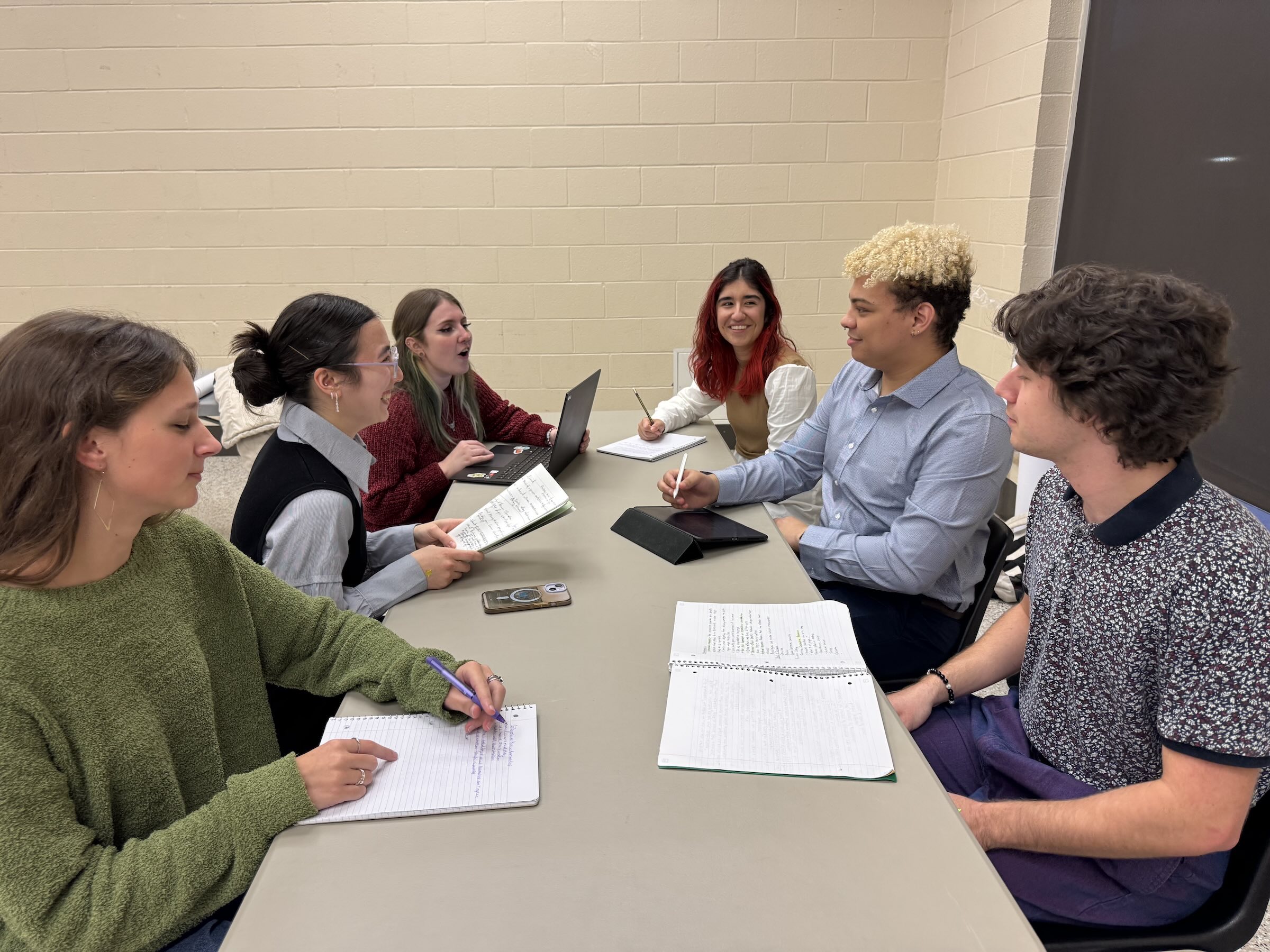
Tennessee Tech University’s Department of Counseling and Psychology has revamped its senior capstone, replacing the traditional undergraduate thesis requirement with hands-on research and applied lab experiences designed to better prepare students for graduate school and the workforce.
The shift comes as faculty noticed that undergraduate enrollment in the program has increased significantly in recent years. After graduation, most of those undergraduates either pursue their master’s degree or go into the workforce. Those trends highlighted the need for earlier, structured research readiness, said Department Chair Michael R. Hoane.
“We realized students needed meaningful research experience long before they reached the thesis stage of a doctoral program,” he said. “By moving away from a mandatory thesis and into faculty-led labs, we’re giving them the tools and confidence they’ll need later. For us, the process really is the point.”
Under the new model, seniors choose from a wide range of labs – from legal psychology to evolutionary cognition to children and technology – or select an applied experience focused on professional practice. Instead of producing a thesis, students join research teams, develop projects, work directly with study participants, analyze real data and present their findings.
The structure gives them professional polish and foundational research skills without the pressure of being expected to also produce a thesis. The counseling and psychology professors say they see it as an opportunity to modernize the senior experience into something both scalable and career-ready.
Professor Matthew Zagumny said the lab-based approach helps students connect classroom theory with real-world application.
“These labs let students step into the role of a researcher or practitioner in a way that was harder to do with a one-time thesis,” he said. “They learn how to work on a team and how to talk about what they’re doing and why it matters. It prepares them for graduate programs and for the workplace.”
Assistant Professor Haley Dawson, who leads the Legal, Experimental and Applied Psychology (LEAP) Lab, said the shift gives students a chance to grow through the work itself.
“These kinds of experiences are transformative for students who aren’t sure yet if grad school is right for them,” she said.

Associate Professor Stephanie Kazanas, who directs the Evolutionary Cognitive Psychology Lab, said the new structure gives students opportunities to immerse themselves in real scientific inquiry.
“When students are working in the labs, they’re not just learning concepts – they’re learning how psychologists build knowledge. That experience prepares them for any research environment they step into,” she said.
Each of the nine labs offers a distinct focus. Students in the Positive Psychology Lab, for instance, study awe and its relationship to prosocial behavior and well-being. The Legal Psychology Lab explores why innocent people falsely confess and how juries reason through evidence.
Others examine children’s trust in technology, adaptive memory, language and culture, existential questions of meaning, emotions such as jealousy, guilt and envy, and the role of technology in first responders’ health and wellness.
The department is also working to increase community engagement opportunities to support the shift, with the long-term goal to strengthen undergraduate research culture while positioning the department for greater research activity overall.
For students considering careers in counseling, human services or applied behavioral fields, the model offers customized paths that don’t require traditional research writing. For those who are eyeing master’s or doctoral programs, the labs create a training ground for the skills they’ll need later, including designing studies, interpreting data and presenting evidence of their work at conferences.
“We want every psychology major to be career-ready," concluded Hoane. "Whether they go straight into the workforce or come back for graduate school, they’ll have the kind of experiences that set them up for success."
Learn more about Tennessee Tech's Department of Counseling and Psychology at www.tntech.edu/cp.