

Tennessee Tech professor represents university at global chess in education conference in India
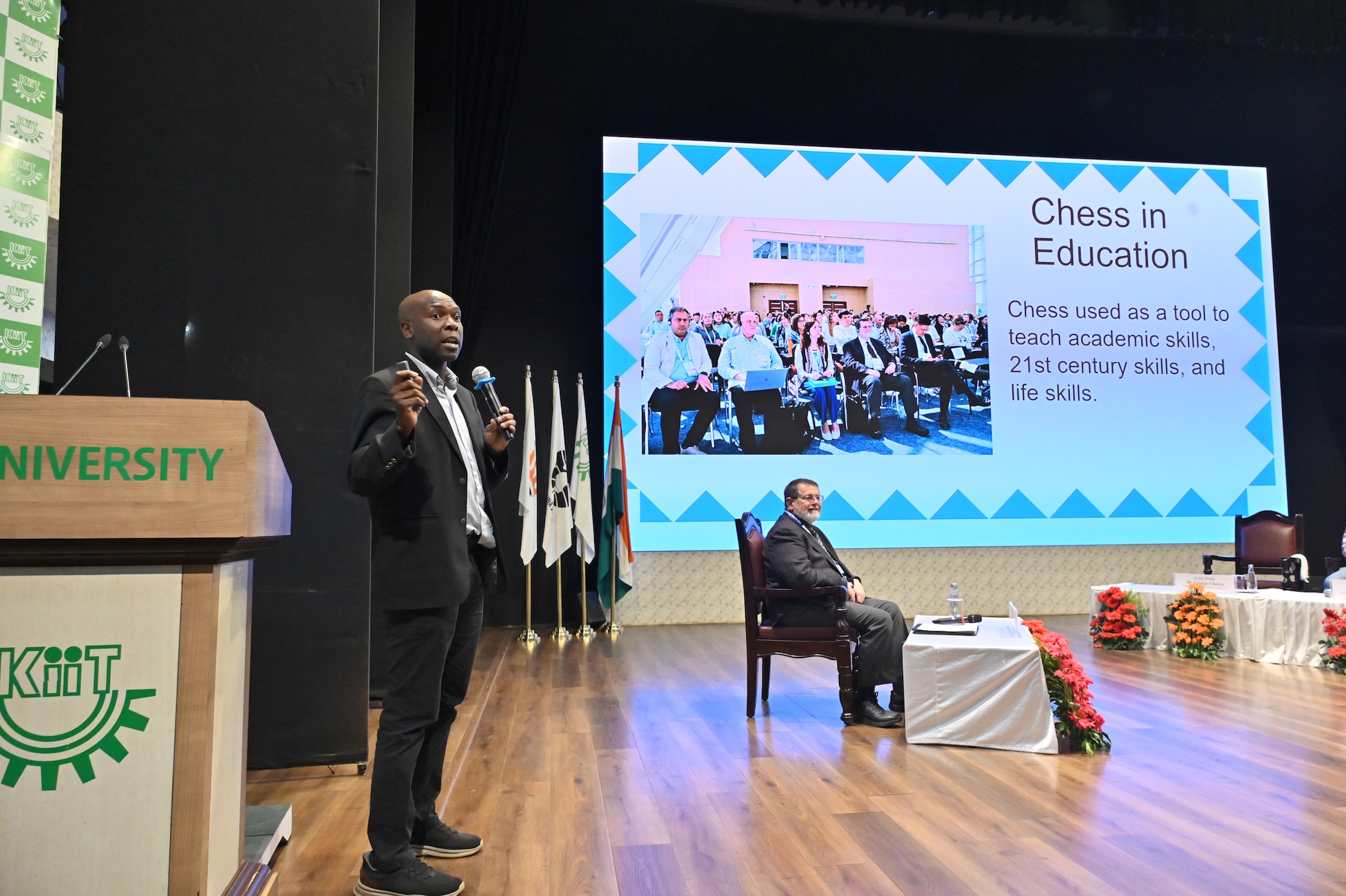
George Chitiyo, professor of educational research and evaluation in Tennessee Tech University’s College of Education & Human Sciences, attended the International Chess Federation’s inaugural Global Conference on Chess in Society and Education in January 2026 in Bhubaneswar, India.
The Jan. 14-16 conference, organized by the International Chess Federation (FIDE), brought together educators, researchers, policymakers and social-impact leaders from around the world to explore how chess can be used as an educational tool and a catalyst for community development.
Chitiyo was invited to speak because of his expertise in chess research and educational evaluation. His presentation focused on how chess initiatives in schools and communities can be assessed effectively, emphasizing the importance of evidence-based evaluation in program design.
“My role is to help practitioners think about the outputs and outcomes they want to achieve and how to measure whether those outcomes are actually happening,” Chitiyo said. “It was exciting to connect with people from around the globe who are using chess in creative ways to support learning and social growth.”
Chitiyo has been at Tech since 2008 and has conducted research on chess in education since 2012. His work, including studies conducted in Tennessee and Alabama with colleague Lisa Zagumny, dean of Tech’s College of Education & Human Sciences, examines whether skills developed through chess — such as critical thinking, problem-solving and decision-making — transfer beyond the chessboard into academic and life outcomes.
While chess has traditionally been studied in relation to math and academic performance, Chitiyo said the field is expanding to consider broader applications.
“There’s a new way of thinking that views chess not simply as a game, but as a pedagogical tool for teaching time management, problem solving, higher-order thinking and other 21st-century skills,” he said.
The Bhubaneswar conference highlighted the growing global movement to integrate chess into educational and social programs. Participants shared initiatives ranging from chess in schools to chess programs in prisons, senior communities and community-building efforts.
Chitiyo noted that some of the most meaningful outcomes of chess initiatives can be unexpected. In one pilot program, children were given chessboards to take home, and families reported increased quality interaction around the dinner table — a benefit beyond the original academic focus of the research.
“That was an unintended outcome, but an important one,” Chitiyo said. “It showed chess can also foster social connection and engagement in ways people may not immediately anticipate.”
Chitiyo said the conference underscored the need for careful program evaluation as chess continues to gain traction as a pedagogical tool worldwide.
“Chess presents many opportunities for education research,” he said. “The key is ensuring that programs are designed thoughtfully and that credible evidence is collected to assess their effectiveness.”
Chitiyo credited support from Zagumny and Department Chair Jeremy Wendt in not only helping him advance his research but also strengthening Tech’s role in global research conversations.
Learn more about Tech’s College of Education & Human Sciences at www.tntech.edu/education.