
Alumni Spotlight: Jake Jordan’s journey from chemical engineering at Tennessee Tech to cancer treatment at Mayo Clinic
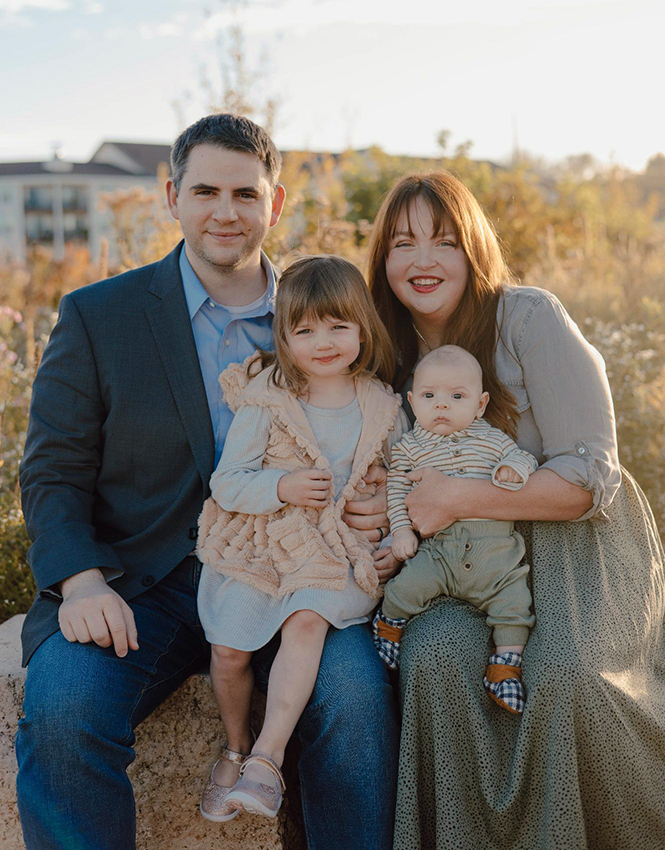 When Jake Jordan graduated from Tennessee Tech in 2014 with a Bachelor of Science
in Chemical Engineering and minors in chemistry and math, he couldn’t have imagined
the winding, rewarding path his career would take—from nuclear research to medical
school, and now to a residency in radiation oncology at the Mayo Clinic.
When Jake Jordan graduated from Tennessee Tech in 2014 with a Bachelor of Science
in Chemical Engineering and minors in chemistry and math, he couldn’t have imagined
the winding, rewarding path his career would take—from nuclear research to medical
school, and now to a residency in radiation oncology at the Mayo Clinic.
Originally from Smyrna, Tenn., Jordan was drawn to Tech because of its welcoming atmosphere and supportive community. “Everything felt approachable,” he said. “Everyone I met seemed very invested in my education.”
During his time on campus, Jordan was part of the Honors Program and lived in Honors Program housing, which provided a close-knit community of friends and mentors. He was also involved in University Christian Student Center and the choral programs, which gave him balance beyond the lab and classroom. What stood out most, though, was the chemical engineering department’s commitment to students’ success. “The professors really cared that we weren’t just learning the book material,” Jordan said. “They wanted us to understand how to conduct ourselves when we entered the workforce.”
One chemical engineering faculty member who made a lasting impact was Joseph Biernacki, Ph.D., professor emeritus. “The things I learned from him served me very well in my job at Oak Ridge National Laboratory,” Jordan said. “He helped me learn how to think and ask questions, not just recite facts—and that helped me succeed independently when I started my career.”
Jordan describes his years at Tech as truly transformative. “I came in without study habits and little sense of personal investment,” he admitted. “By senior year, I had to be able to guide my own learning and career to succeed. I also met my wife and many lifelong friends at Tech—people who have shaped my life ever since.”
A Career of Many Chapters
Jordan’s professional journey after graduation demonstrates how far a Tennessee Tech chemical engineering degree can take students—and how many opportunities it can open up.
“After graduation in 2014, I initially started a doctorate in nuclear engineering at University of Tennessee-Knoxville (UTK),” he said. “My first group focused on predictive modeling, and I spent a lot of time doing MATLAB analysis and working with early neural network concepts before AI really took off.”
Wanting to get back to hands-on chemical work, Jordan transitioned into a radiochemistry group, which led to an internship at Oak Ridge National Laboratory (ORNL) in radiochemical process engineering. “That group was led mostly by chemical engineers and chemists,” he said. “Our focus was on uranium fuel cycle chemistry, reprocessing and off-gas management.”
That internship became a full-time research position at ORNL, where Jordan worked while completing his master’s degree in nuclear engineering. “Most of my work involved experimental testing—building systems, running experiments, taking data,” he said. “I also used chemical engineering concepts for pilot plant design for nuclear fuel processing.”
After earning his master’s degree, Jordan began the chemical engineering doctoral program at UTK and completed several core courses and part of his qualifying exam before deciding to move closer to home. He accepted a position at Arnold Air Force Base in the analysis division, focusing on rocket modeling projects. “That job was almost entirely MATLAB coding and data analysis,” he said. “There wasn’t much chemical engineering involved, but my training prepared me well for it.”
Eventually, Jordan began to feel a pull toward a more people-focused career. “My wife calls it my ‘quarter-life crisis,’” he said. “I realized I wanted to do more than tinker with research projects or write code. So, while working full-time, I studied for the MCAT.” His strong foundation in chemistry, physics and biochemistry from Tech made the process smoother, and he was ultimately accepted into medical school at the University of Tennessee Health Science Center in Memphis, starting his study in fall 2020.
In medical school, Jordan found that his engineering background gave him a unique edge. “A lot of the preclinical coursework is memorization, but in the hospital setting, my engineering training really helped, especially in synthesizing information, analyzing trends and working as part of a team.”
Jordan ultimately discovered a specialty that tied all his experiences together: radiation oncology. “It combines everything I’ve studied—nuclear science, chemical engineering and medicine,” he said. “I treat cancer patients with radiation therapy using high-energy x-rays and proton therapy.”
Jordan recently matched into the radiation oncology residency program at the Mayo Clinic in Rochester, Minnesota, where he’ll train until 2029. “I feel well prepared to treat patients clinically and perform research in this physics-heavy field,” he said. “It’s a perfect intersection of all my interests.”
Advice for Future Golden Eagles
Looking back, Jordan credits Tennessee Tech with giving him the foundation to thrive in each stage of his journey. “Being in chemical engineering at TTU is a great way to have options in any field you want,” he said. “My classmates went into chemical manufacturing, environmental engineering, academia and more. For me, that same foundation has carried me through nuclear engineering, modeling and simulation, radiochemical research—and now medicine.”
“The skills I learned at Tech—critical thinking, data analysis, and problem-solving—have been useful in every single job I’ve had,” he added. “Even though my day-to-day now looks nothing like designing a refinery, those same concepts help me every time I analyze patient data or design a research project.”
Jordan encourages current and prospective students to stay open to new directions. “You never know where your engineering degree might lead you,” he said. “For me, it’s been a journey from process engineering to patient care—and it all started at Tennessee Tech.”