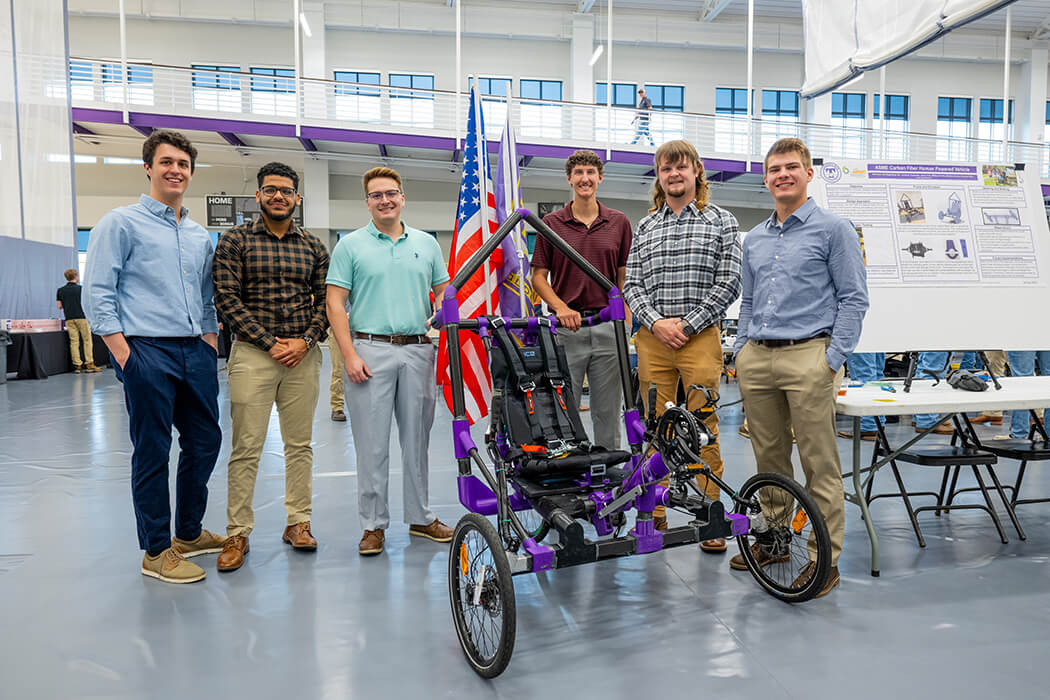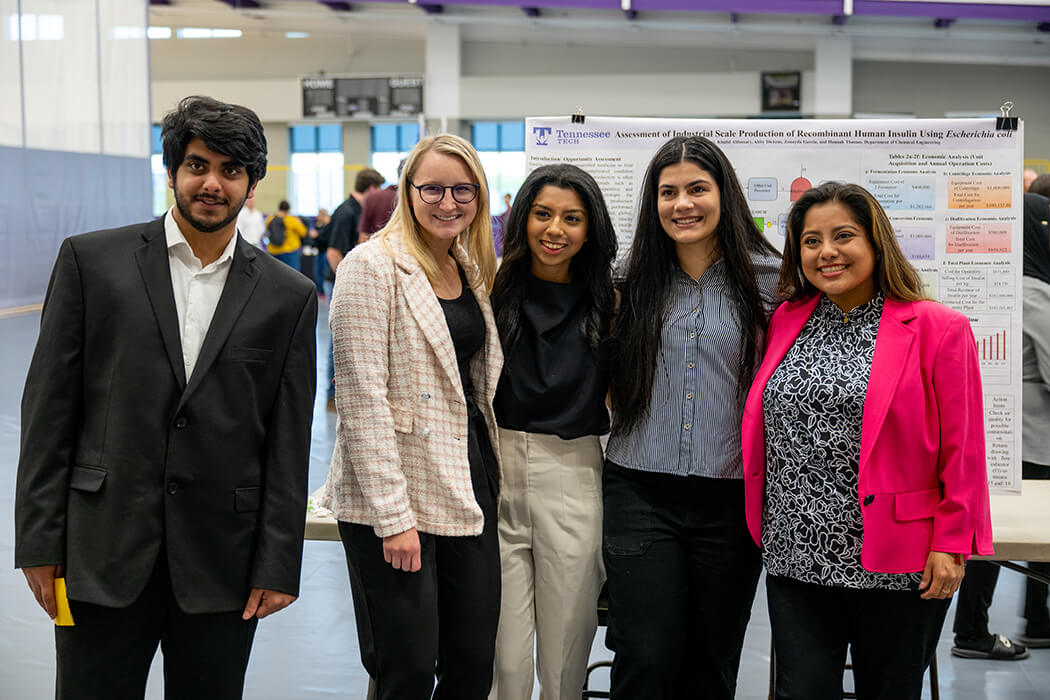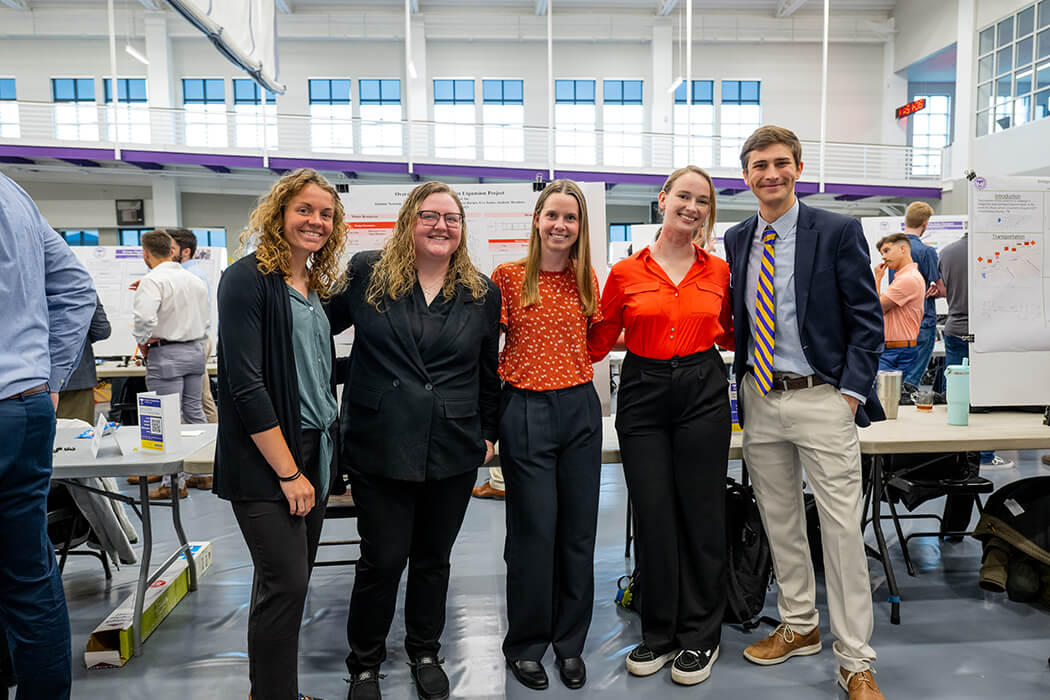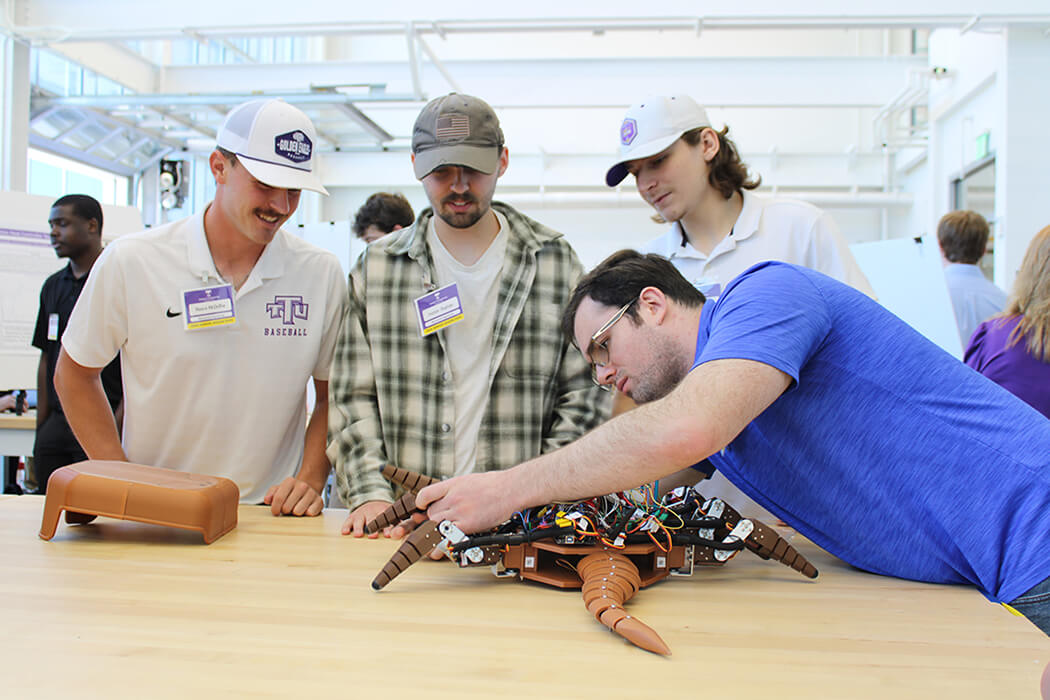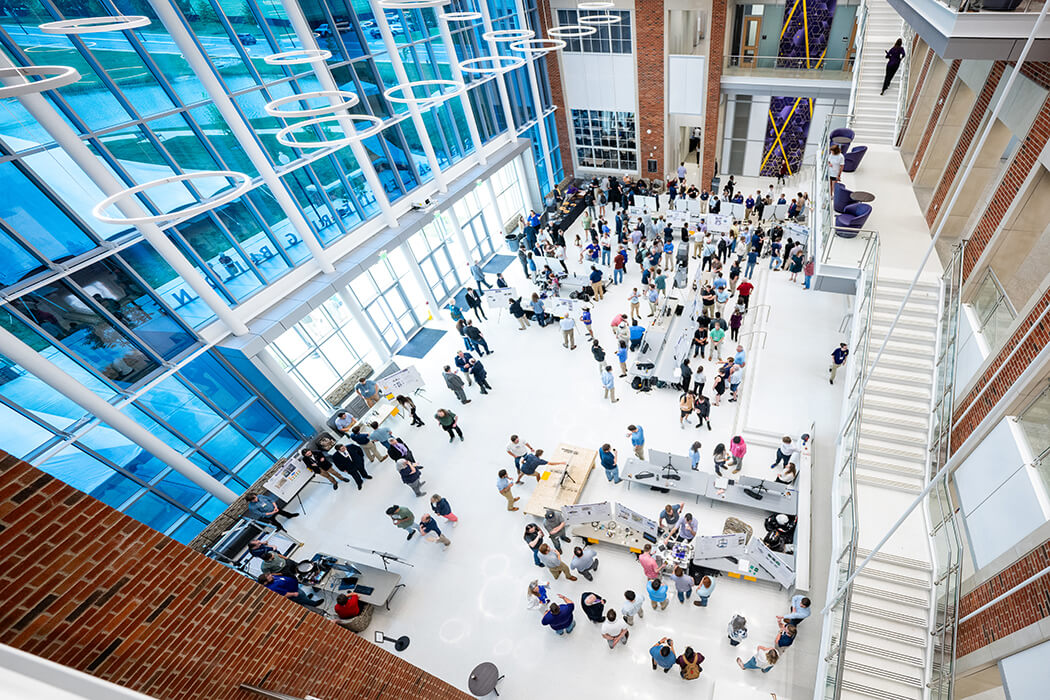
Spring 2026 Senior Design Expo
Thursday, April 30, 2025, 11AM - 1PM in the Ashraf Islam Engineering Building
Be sure to visit Tech’s ‘Visitor Parking’ web page to find the closest available parking.
Industry Partners: Get Connected! Sign up here.
Students participating in the design expo:
Find resources to help you with your poster design and printing here.
Project and Team Information Below
Questions? Call (931) 372-3172 or email engineering@tntech.edu.
What is Capstone?
When you are nearing the end of your undergraduate or graduate program, your advisor will be talking to you about your Capstone Project. A capstone project is intended to apply all of the knowledge and skills you’ve gained over a college career in one assignment.
Although the projects do showcase your educational accomplishments, they are more about demonstrating that you know how to learn. They are intended to encourage students to use the critical thinking skills they have acquired through their degree programs to solve problems.
Benefits to Students
- Hands-on experience solving a complex real-world problem in an agile, team environment —skills necessary for success.
- Gain necessary exposure to bridge the gap between student and professional.
- Gain experience applying engineering knowledge to solve industry problems.
- Understand and learn importance of time and budget constraints.
Team Projects by Department
Civil and Environmental Engineering
- » Design of a Plant-Wide Flood Mitigation System - Perimeter Floodwall, Flood Gates,
Site Drainage & Sewer Relocation
Team Members: Michael Reese, Jeremy Eduave, Israel Cansino, Ty Smith, Isabella Pryor, Glory Jones
Mentors: Barge Design
Project Overview: Design of a Plant-Wide Flood Mitigation System Consisting of a Perimeter Floodwall, Flood Gates, Site Drainage, and Sewer Relocation
- » Design of a Replacement Bridge - Haywood County, TN
Team Members: Micah Owens, Skylar Allen, Danny Hart, Davion Reid, Nick Fritts, Alex DeBruyn
Mentors: Benesch
Project Overview: Design of a Replacement Bridge Located in Haywood County, TN
- » Emergency Bridge Replacement and Approach Reconstruction of I-26 over Nolichucky River
- Unicoi County, TN
Team Members: Mary Davis, Anna Frazier, Logan Dodd, Matthew Botros, Peyton Caudell, Kylar Stewart
Mentors: HMB Professional Engineers
Project Overview: Emergency Bridge Replacement and Approach Reconstruction of I-26 over Nolichucky River Unicoi County, TN
- » Site Design and Structural Design of an Apartment Complex - Knoxville, TN
Team Members: Adrian Wilkerson, Joseph Puffer, Baher George, Nik Anderson, Nate Haren, Isaac Sidoli
Mentors: Jack Southard Co. and American StructurePoint Inc.
Project Overview: Site Design and Structural Design of an Apartment Complex in Knoxville, TN
- » Warehouse Breakroom Building Design at Jack Daniel’s Distillery - Lynchburg, TN
Team Members: Abby Reeder, Sawyer Thompson, Halee McKaskle, William Sells, Thomas Wilkerson, Eli Burgess
Mentors: LBYD Engineers
Project Overview: Design of a Warehouse Breakroom Building at Jack Daniel’s Distillery in Lynchburg, TN
- » Site-Design of a Residential Development - Morristown, TN
Team Members: Harper Dee, Liam Hayes, Lauren Perry, Samuel Bruce, Nicolas Montealegre, Macie Owings
Mentors: Mattern & Craig
Project Overview: Design of a Warehouse Breakroom Building at Jack Daniel’s Distillery in Lynchburg, TN
- » Design of a Replacement Bridge over Branch along S.R. 445 - Gibson County, TN
Team Members: Sidney Miller, Jackson Batchellor, Rachel Branam, Jonathan Miller, Ashton Ribaric, Jenna Gicewicz
Mentors: STV Inc.
Project Overview: Design of a Replacement-Bridge over Branch along S.R. 445 in Gibson County, TN
- » Design of a Replacement Bridge over Cedar Creek on Beasleys Bend Road - Wilson County
Team Members: Aaron Vaughn, Jackson Miller, Dexton Emberton, Dylan Thurman, Jase Rumph, Luke Rogers
Mentors: Tennessee Department of Transportation
Project Overview: Design of a Replacement-Bridge over Cedar Creek on Beasleys Bend Road in Wilson County
Computer Science
- » ARCS
Team Members: John Mark Pickle II, Anson Fry, Christopher Mays, Asher Power, Dylan Parrott, Nicolas Luebstorf
Mentor: Michael Finley, ARCS Aviation
Project Overview: This project involves the development of a web based operations dashboard designed to improve visibility, coordination, and workflow management across multiple roles within a software development team. This Azure DevOps integration provides a centralized interface where developers, quality assurance, project managers, and business administrators can view project status, monitor sprint progress, and track development activity. Built using a React-based front end, the platform presents information through role specific dashboards that display relevant metrics such as assigned tasks, estimated work hours, sprint performance, testing progress, and project health indicators. Retrieves live data including projects, teams, sprints, and work items, allowing the dashboard to reflect real development activity. Additionally, the application enables developers to report obstacles directly from the interface, automatically posting comments to the discussion section of the corresponding Azure DevOps work item to improve traceability and communication across the team. By combining real time DevOps data with an intuitive interface tailored to different organizational roles.
- » Averitt
Team Members: Sayf Manasrah, Dominic Michael McElroy, Eli Bennett, Adrian Morack, Connor CJ Allen, Spencer Arney
Mentor: Craig Foster, Averitt Express
Project Overview: A generative AI chatbot (Assistant) to facilitate company data and parse and summarize into readable and easy to access documents. Access provided to both Admin and normal users using various security mechanisms and a corporate level secure login.
- » Cookeville Police Department
Team Members: Mark Weber, Noah Whitworth, Juvensky Hyppolite - Jean, Connor Wing, Luke Calhoun
Mentor: Jason Tindall, Cookeville Police Department
Project Overview: The Quartermaster Module of the Hubble project for the Cookeville Police Department will serve as an interface for officers and admins to view a detailed breakdown of equipment distribution. The module will be accessed through the existing Hubble website by selecting the Quartermaster Module tab. Users will be able to view the existing PD inventory. Users will be able to view both their own and other officers’ current equipment, vehicles, vehicle accessories, etc. Assigned inventory items can be transferred from one officer to another as needed by PD personnel.
- » Digital Dream Forge
Team Members: Hunter Wilcox, Landon Byrge, Grant Palasak, Carter Haney, Henry Fairfax, James Miller
Project Overview: We have developed a custom web-based time-tracking system that integrates with the existing Digital Dream Forge chatbot to automatically record employee punches and simplify timecard management. With role-based access for employees, managers, and administrators, the system will reduce errors, improve workflow efficiency, and provide a maintainable solution using React, Node.js, and MongoDB.
- » Kelle Zyer
Team Members: Marcus Writesman, Alec Jones, Madalynn Pendergrass, Wei Wang, Filoubatir Fadel, Contessa Wilburn
Project Overview: This project centers on the development of a mobile game series inspired by the Undercover Cat Mysteries book franchise, beginning with a flagship match‑3 puzzle title that integrates narrative elements from the novels. The game expands traditional puzzle mechanics through interactive character and companion selection,and customizable outfits features designed to enhance immersion and player engagement. Planned premium systems include subscription‑based enhancements such as additional lives, bonus power‑ups, move banking, and other exclusive gameplay advantages. The project also involves finalizing and integrating a comprehensive monetization framework to support in‑game purchases and long‑term scalability across future titles in the series.
- » ORNL
Team Members: Avantika Laine, Ian Chandler, Geovany Rodriguez, Brent Maxwell, Samuel Warren
Mentor: Mark Root, Oak Ridge National Laboratory
Project Overview: Our project is an Angular component that serves as an image data extraction tool for ORNL. It utilizes the OCR tool from the Tesseract library to process images, find any text contained within them, and extract it. Then it organizes the data into predesignated text boxes based on the labels and content found in the image.
- » Putnam County
Team Members: Lela Gracy, Justin Dieter, Kayla Humphrey, John Yaw, Zack Enright, Maxwell Askren
Mentor: Katelyn Steakley, Putnam County School System
Project Overview: Thrifty Bites serves families in the Upper Cumberland region, including participants in Food Bank and Backpack programs who face food insecurity and need access to affordable, nutritious meals. The Thrifty Bites website is a bilingual digital cookbook and community resource hub that offers recipes under $10 and lets users filter, explore, and save their favorites. Unlike the existing printed cookbook, this platform delivers a web based, mobile friendly, and visually intuitive experience that empowers families to plan and prepare affordable meals. Its dynamic design adapts to the evolving needs of the community.
- » SAIC
Team Members: Anthony Hardy, Kazusa Sato, Nicholas Hogan, Michai Hughes, Seth Marter
Mentor: Erika Bowling, SAIC
Project Overview: SAIC’s Employee Project Assignment Tracker (EPAT) will be responsible for tracking tasks assigned to employees of SAIC. New features will focus on making the application more efficient and convenient. We are increasing the quality of the application by upgrading the framework, infrastructure, and graphical user interface.
- » Transcard
Team Members: Aaron Weng, Dylan Smith, Meicheng Xiao, Ethan Thomas Kerley
Mentor: Stephen Griffin, Transcard
Project Overview: Our team built a Power BI dashboard for SMART Exchange with Transcard. The report includes CFO and business views that show transaction counts, total dollars, payment methods, payment status, settlement time, top businesses, and payee activity over time.
- » TTU First Responder
Team Members: Travis Schowen, Dhruv Patel, Paul Nix III, Cole Pratt, Javontae Martin
Mentor: Tennessee Tech University Department of Psychology
Project Overview: Firefighters operate in high-risk environments that place significant physical and psychological demands on their health. Exposure to traumatic events, irregular schedules, and intense workloads can lead to fatigue, stress-related disorders, and long-term health concerns. This project presents the design of a firefighter wellness application that supports both mental and physical health monitoring. The system includes features for tracking stress and mood, monitoring physical activity and recovery, and providing cognitive reaction exercises to maintain alertness. Additionally, administrators can export anonymized data for research and departmental analysis, supporting improved understanding of firefighter health and performance.
- » Fleet Management
Team Members: Garrett Green, Liam Owenby, Gabriel Porteiro, Vladimir Serov, J'Mya Holloway
Mentor: Elijah Plattner, ZOE International
Project Overview: In support of an international anti-child trafficking organization based in Thailand, this group developed a robust and full featured fleet management solution. The software solution allows users to reserve vehicles for mission-critical tasks, maintain and schedule maintenance activities, and be guided through vehicle inspections.
- » Medical Communications
Team Members: Michael Serdar, Mia Guzman, Gianni Matosich, Corbyn Thomas, Kristian Obrusanszki
Mentor: Sam LeFave, Field Missions of Tennessee
Project Overview: Field Missions of Tennessee provides pop-up style free medical clinics to members of communities around the State of Tennessee with an emphasis on distressed counties. Working from a student-developed solution created by Tennessee Tech students, our group further enhanced the previously provided solution to ensure operational continuity. Additional features added to the solution include a communication platform allowing Field Missions and their host organizations to support bi-directional digital communication with individuals that utilize their services.
- » Digital Twin
Team Members: Dalton Sloan, Fengjun Han, Brock Schoenthaler, Samuel Hartmann, Donald Oeser
Mentor: Jason Reep, Tenet 3
Project Overview: Working with Tenet3's MeTRA software solution, this Computer Science team developed a machine learning focused solution to ingest and design a digital twin system from blueprints and schematics provided in multiple formats. The solution was leveraged to develop an understanding of the flow and origin of VOCs in the Ashraf Islam Engineering Building.
- » Sales Forecasting
Team Members: Daniel Mullinix, Justin Nelson, Cesar Vargas Cabellero, William Sigler, John Herron
Mentor: Justin Smith, Autoflyte
Project Overview: As a leading automotive sales insight platform, Autoflyte provides forecasting and reporting of vehicle sales to dealers and other interested parties. Our group worked with Autoflyte to develop a solution that provides visual insights into sales figures based on many geographically distinct features including county-level and zip.
- » Command and Control
Team Members: John Brentlinger, Jameson Cook, Kaden Santos-Hien, Mohammed Alshwaish, Joey Milton
Mentor: Josh Millsap, Palo Alto Networks
Project Overview: Building on the open-source C2 framework, this student worked with industry professionals to develop a command and control system for use by Cybersecurity professionals.
- » AI Medical Assistant
Team Members: Philip Stafford, Jackson Frazier, Samuel Fincher, Nicholas Atkins, Jacob Hernando
Mentor: David Haleman, Capgemini
Project Overview: As healthcare continues to accelerate as a data-driven profession, physicians have more data available about patients and illnesses than ever before. With greater data comes a challenge of processing the data and analyzing its context alongside that of the patient. This group developed a solution using machine learning and artificial intelligence to work as a digital assistant for physicians providing an easy and intuitive interface to gather and process the abundance of data available to them about a patient.
- » Bridging Hope
Team Members: Julian Trujillo, Brynn Rogers, Alexander Redd, William Donovan, Angel Cabrera Romero
Mentor: Dr. Seth Williams, Tennessee Tech University
Project Overview: Launched as a student-developed project, Bridging Hope strives to be a one-stop solution for non-profit management in the social services sector. This group added additional features to the solution including a more robust food pantry management interface, volunteer management and time clock, as well as working with several existing non profits to deploy their solution to help them assist members of their community.
- » Sports Dashboard
Team Members: Osvaldo Rodriguez, Evan Mcintyre, Cristofher Juarez, Ethan Byker, Ryan Prax
Mentor: Dr. Christy Cody, SAS
Project Overview: This student group utilized SAS Viya to develop a visual dashboard as a digital decision support tool for Major League Soccer's Los Angeles Football Club. The solution developed by the student group may be used by LAFC to assist with business evaluations including venue design and sales strategies.
- » Campus Engagement
Team Members: Sabrina Wiesner, Gavin Bright, George Howard, Liam Rivers, Jacob Crumb, Peyton Simmons
Mentor: Taylor Patterson, Acato Information Management LLC
Project Overview: A campus community offers many opportunities for students to learn and grow. The mobile application developed by this group supports the students' journey as they navigate creating study groups and recovering from missed classes while ensuring their safety on campus.
- » AI in Local Government
Team Members: Ashley Porter, William Denning, Olivia Henry, Yashvi Gajjar, Connor Sherrill
Mentor: Mark Farley, Upper Cumberland Development District
Project Overview: UC Assist is a social services aggregation service provided by the Upper Cumberland Development District for members of the Upper Cumberland communities. In this project, the group re-developed the UC Assist web application to make it more robust and enhance its feature set. Among the most impactful improvements is a geolocation aware search process allowing users to focus on services that are near their location. Additionally, by leveraging Google's Gemini AI solution, the team was able to develop a searching solution using natural language processing to better support finding services for the users of the application.
- » ML-drive Well Production Forecasting
Team Members: Taylor Turner, Matthew Hazelwood, James McDavid, Alexander Lujan, Jeffrey Monday
Mentor: Nikolaos Mitsakos, Occidental Petroleum Corporation
Project Overview: Tasked with using machine learning to tackle an industry challenge, the group worked to develop a ML-driven solution that strives to predict well production based on early data collection. In addition to the data-driven predictive features, the team further developed a graphical web-based dashboard to support decision making processes through visual artifacts.
- » CO2 Supply Model
Team Members: Srivishnu Yadali, Bryant Koester, Anthony Lamantia, Daniel Getahun, Alden Pounders, Brence Moore
Mentor: Nikolaos Mitsakos, Occidental Petroleum Corporation
Project Overview: The team developed a solution to forecast the availability and distribution of antropogenic CO2 sources across the United States alongside the evaluation of CO2 capture technologies at these sites. The resulting solution leveraged Geographic Information Systems technology, web-based dashboards and interfaces, as well as data science techniques to deliver a robust solution to empower decision-makers as they evaluate these key features.
- » Community Medical PopUp
Team Members: Cameron Jasper, Bethany Hedge, Miguel Glass, Skyler Emery, Matthew Hodges, Lauren Scott
Mentor: Ben Burchfield, DUO
Project Overview: This project is the result of the synergy found through cross-discipline cooperation. The resulting system was developed as a registration and patient management system to support a faith-based community medical group that provides free medical, dental, and optical services as well as haircuts to members of the Upper Cumberland. The project has been developed through an iterative Agile process leaning on the strengths of students in both departments. The resulting application is a robust solution that allows the medical group to have visibility into patient care as well as the demand for services.
Chemical Engineering
- » Lochinvar Gas Fired Heaters I: Flue Gas Recirculation for NOx Reduction
Team Members: James (Cameron) McLaughlin, Kenan (Keni) Colakovic, Nathan Stewart
Mentor: Ben Putnam, Lochinvar
Project Overview: Combustion-based water heaters have a universal problem of producing harmful emissions that are a threat to the Earth’s atmosphere. Lochinvar is a company based out of Lebanon TN, and they produce combustion-based water heaters. Government regulations have become much stricter over the years about NOx emissions, and this has put pressure on the company to find a quick solution to this issue. In this project proposal, a method will be presented to reduce these emissions and provide Lochinvar with a solution to the problem.
- » Lochinvar Gas Fired Heaters II: Water Injection + Fuel/Air Ratio for NOx Reduction
Team Members: Addison Stooksbury, Larissa Giles, Hailey Snodgrass
Mentor: Ben Putnam, Lochinvar
Project Overview: Lochinvar water boilers are heated via natural gas combustion, which results in the production of harmful flue gas emissions, specifically nitrogen oxide (NOx) gases. This project investigates the potential for reducing NOx emissions while maintaining safe and efficient boiler operations in a residential natural gas water boiler by lowering the flame temperature through the use of water mist injection into the combustion air stream and air to fuel ratio adjustments.
- » Rum Quality I: Extrinsic Oxidation
Team Members: Emily Yates, Aaron Davis, Austin Brewington
Mentor: Phil Pritchard, Pritchard Distillery
Project Overview: Prichard’s Distillery produces a cranberry flavored rum that initially exhibits a bright red color derived from cranberry concentrate. However, after approximately five to six months of storage, the product gradually shifts to an amber-brown color and then a pale-brown color after more time. During a visit to the distillery, it was also observed that the flavor profile changes as the product ages. The fresh cranberry rum produces a strong cranberry taste when first consumed and leaves a tarte cranberry aftertaste. In contrast, the degraded samples taste primarily like straight liquor with only a faint cranberry aftertaste. These observations suggest that chemical degradation of the cranberry compounds occurs during storage.
This project will investigate oxygen ingress through bottle closures as a potential contributor to both color and flavor degradation. The current bottling process does not include inert gas purging prior to the cork insertion, meaning atmospheric oxygen remains in the bottle headspace when sealing. Additional oxygen may also diffuse into the bottle over time through the cork material or at the cork-glass interface. This project will evaluate natural and synthetic cork closure, as well as secondary sealing methods including shrink wrapping and wax dipping, to determine their relative effectiveness at limiting oxygen ingress during storage. In addition to cranberry rum samples, bottles containing a methylene blue indicator solution will be used as a parallel oxygen-sensitive system, allowing visual tracking of oxygen ingress independent of the rum’s complex chemistry. The study was split into three primary sections by the research teams:
· Polymerization and pH
· Intrinsic Oxidation
· Extrinsic Oxidation (The focus for this team) - » Rum Quality II: Intrinsic Oxidation
Team Members: Thomas (Gray) McMurty, Parker Rosenblatt, Noah Oaks
Mentor: Phil Pritchard, Pritchard Distillery
Project Overview: The purpose of this capstone project is to find and fix the problem behind the color degradation in Prichard’s Cranberry Rum. The bright red color of this rum is going away over time, and the problem we think it is facing is intrinsic oxidation of the anthocyanin compounds. Throughout the course of this project, tests based on dissolved oxygen, heat exposure, and UV visibility will be run to prove the issue of oxidation. Gallic acid was researched to be a possible solution to an oxidation problem, so trials implementing this chemical will be run after oxidation tests. The study was split into three primary sections by the research teams:
· Polymerization and pH
· Intrinsic Oxidation (The focus for this team)
· Extrinsic Oxidation - » Rum Quality III: pH/Polymerization
Team Members: Daniel Kidder, Wyatt Tunstall, Stephen Combs, Philopateer (Phillip) Fakhry
Mentor: Phil Pritchard, Pritchard Distillery
Project Overview: Color stability is crucial in fruit based alcoholic beverages, and it influences the customer's perception and the acceptance of the product itself. The reason cranberry based beverages have their deep dark red hue is due to Anthocyanins, which are type of plant pigment. Many fruits and vegetables receive their red, purple, and blue hues from these molecules, which are members of the anthocyanin family of polyphenolic compounds. A rum manufacturer discovered that their cranberry rum is having a color change and degrading over time. The beverage that looked rich and deep red gradually changed to brown or yellow with some taste changes. Depending on the pH of the solution, anthocyanins can take on a variety of structural shapes. The equilibrium between these forms is shifted by pH changes, resulting in a variety of hues, from red in acidic environments to blue or colorless at higher pH levels. (Mazza & Miniati, 1993). Anthocyanins are very sensitive to a few environmental elements such as temperature, pH, oxygen exposure, and chemical interactions. That leads to anthocyanin containing beverages having a gradual color change over time in storage. Anthocyanins are merged into an alcoholic structure together with sugar, ethanol, water, and other organic molecules when cranberry juice is added to the cranberry rum product. Color is important for marketing and the quality of the product. Comprehending the chemical mechanism responsible for the degradation is crucial. The capstone project teams were tasked to figure out the cause and of the color change and how to fix it. The study was split into three primary sections by the research teams:
· Polymerization and pH (The focus for this team)
· Intrinsic Oxidation
· Extrinsic Oxidation - » Unit Operations Equipment I: Absorption/Stripping
Team Members: Ryan Martin, Zachary Wright, Katherine Delk
Project Overview: The Absorption and Stripping columns in Tennessee Tech’s Unit Operations Lab are used by students to understand mass transfer principles such as countercurrent gas-liquid flow and the concept of gas scrubbing. However, these columns are in need of maintenance and upgrading. The columns are dirty, have several broken parts, and are lacking the proper components to be run experimentally for students.
To address these issues, the project has been divided into three main sections: cleaning, component replacing, and CO2 integration. For the first several weeks, the apparatus will be cleaned; this will include flushing out rust, cleaning or replacing the packing, disassembling shower heads, and attending to other issues that arise during the cleaning process. After that, component replacing will begin. Two flowmeters—the air flow meter and liquid flow meter—will be removed from the system and replaced with new ones. Additionally, other pipes and fittings will be replaced. Finally, once the system is up to date, a CO2 tank will be connected, and experiments will be run to ensure that it works as intended. By the end of this project, the columns will be useable by future students in order to understand important concepts in chemical engineering.
- » Unit Operations Equipment II: Liquid/Liquid Extraction
Team Members: Brandon Levan, Jalen Lajas, Ian Johnson
Project Overview: Liquid–liquid extraction is an important separation process in chemical engineering, but the department’s Hampden Model H-6150 extraction trainer has not been used in over ten years. Because of that, it currently is not available for lab instruction and needs to be inspected, tested, and brought back into working condition before it can be used again.
The goal of this project is to get the extraction unit fully operational and confirm that it runs safely and consistently. This includes checking the mechanical components, verifying the flow paths, calibrating the instrumentation, and running controlled startup and shutdown procedures to make sure everything functions as intended. We will also document clear operating procedures so future students can use the system without confusion. By the end of this project, the extraction trainer should be fully functional and confirmed for lab use. Restoring this unit will bring back a valuable hands-on learning tool and give students the opportunity to work directly with real separation equipment instead of only learning the theory.
- » Unit Operations Equipment III: Distillation
Team Members: Joshua Galindez Echeverry, Nolan Holbrook, Robert (Tyler) Strader
Project Overview: The distillation column in Prescott Hall room 101 is an important piece of chemical engineering laboratory equipment that has suffered from limited maintenance and outdated supporting systems. The goal of this project is to restore the column to proper working conditions through maintenance, replacement of faulty components, and upgrades to its monitoring system. Key tasks include cleaning the steam traps to remove rust and calcium buildup, replacing broken thermocouples and their wiring, and installing a new computer system to run the LabVIEW software. The upgraded system will include a touchscreen display, a secondary monitor, and a camera to monitor the distillation trays during operation.
The project team will work collaboratively to complete maintenance, install upgrades, and test the system. Performance will be verified by collecting temperature data with the thermocouples and analyzing it to ensure the column operates correctly. Overall, the project will restore functionality to the distillation column and improve its monitoring capabilities, allowing it to continue serving as a reliable laboratory resource for future experiments.
- » Electrochemistry - Nitrate Reduction
Team Members: Nikolas Vassilev, Aspen Lynch, Rochelle Harmon, Morgan Patterson
Mentor: Dr. Ali Estab, Tennessee Tech University
Project Overview: The chemical reduction of nitrates in wastewater is currently costly and operationally complex when using conventional treatment methods. This project advances the use of electrochemical cells as an approach for nitrate reduction, with the goal of selectively converting nitrates into benign nitrogen gas to align with existing wastewater treatment infrastructure requirements. Laboratory experiments will be conducted in a controlled, closed system to ensure that gas products are captured. Reaction products will be analyzed to determine both conversion efficiency and ammonia content.
The study is designed with consideration for scalability, economic feasibility, and integration with current treatment systems. It is expected that nitrate reduction will exhibit selective behavior at specific applied potentials, producing nitrogen gas, ammonia, and other intermediate species depending on the operating conditions. Controlling and varying these conditions will help identify optimal operating parameters for minimizing ammonia production. Further research could explore alternative electrochemical cell configurations and catalyst materials. If successful, this approach could contribute to significant reductions in operational costs for wastewater treatment facilities while improving the efficiency of nitrate removal.
- » Lithium Salt Recyrstallization
Team Members: Hayden Wright, Logan Ballon, Michael McNabb, Enzo Fabris Rocco, Ethan Burt
Mentor: Dr. Bahman Ghorashi, Tennessee Tech University
Project Overview: Lithium is a critical resource for modern technologies, particularly for lithium-ion batteries used in energy storage and electric vehicles. While lithium is present in seawater and aqueous brines in the form of positive lithium ions, its concentration is relatively low and efficient extraction methods remain an important area of research. With the increasing use of desalination processes worldwide, large volumes of concentrated brine streams are produced that may represent a viable source for lithium recovery.
This project proposes a bench-scale method for lithium carbonate separation based on the opposing solubility behaviors of sodium chloride and lithium carbonate. Sodium chloride is more soluble at higher temperatures, whereas lithium carbonate exhibits decreased solubility as temperature increases. By exploiting this difference, a mixed aqueous solution containing sodium chloride and lithium carbonate will be heated to induce crystallization of lithium carbonate. The solution will then be slowly cooled to promote crystallization of sodium chloride, ideally producing separate solid precipitates of each compound. The experimental process will involve preparing aqueous solutions containing sodium chloride at concentrations representative of seawater or desalination brines, while lithium carbonate will be added until saturation is reached at slightly elevated temperatures. The solution will then be heated to promote lithium carbonate crystallization and subsequently cooled in a controlled manner to form sodium chloride crystals. The resulting solids will be isolated and washed, and their purity will be evaluated through acid–base titration using hydrochloric acid and sodium hydroxide.
The scope of this project includes process simulation, safety evaluation, and experimental error analysis. The primary metric of success will be the purity of the recovered lithium carbonate crystals, with a target purity of at least ninety percent, just shy of lab-grade. Achieving high-purity lithium carbonate would demonstrate the feasibility of this thermally driven separation approach. By demonstrating lithium carbonate recovery from saline solutions at the bench scale, this project aims to provide proof of concept for a scalable separation process. If successful, the approach could contribute to future industrial methods for recovering lithium from seawater or desalination brines, supporting the growing demand for lithium resources.
- » Bio Processing I: Optimization of Fibrin Gel Formation using varying Thrombin and
Fibrinogen Concentrations
Team Members: Lilian Sissom, Hannah Farill, Kenzie Fowler, Aaron Livesay, David Giraldo
Mentor: Dr. Robby Sanders, Tennessee Tech University
Project Overview: During the wound healing process, fibrin is formed by the body as a result of the coagulation cascade to achieve homeostasis. The final state of an in vivo fibrin gel formation is executed by the on-site mixing of thrombin and fibrinogen. Although the Chemical Engineering Department at Tennessee Technological University seeks to research the ex vivo formation of fibrin gels, much of this work has been halted due to faulty results revolving around either the gel formation or drying processes. This formal project proposal will highlight the plans for experimental methods, analyzation, and results conducted regarding the critical point drying process utilized for fibrin gel formation.
- » Bio Processing II: Critical Point Drying of Fibrin Gels
Team Members: Aiden Gillis, Lucille White, Chloe Foshie, Malcolm Sherbine
Mentor: Dr. Robby Sanders, Tennessee Tech University
Project Overview: Fibrin gels are widely used biomaterials in biomedical engineering due to their biocompatibility and ability to form natural scaffolds for tissue regeneration and wound healing. Fibrin gels form when the enzyme thrombin cleaves fibrinogen, producing fibrin monomers that polymerize into a three-dimensional network. The physical properties of the resulting gel, including density, strength, and gelation time, depend strongly on the concentrations of thrombin and fibrinogen used during polymerization.
The goal of this project is to investigate how variations in thrombin and fibrinogen concentrations influence fibrin gel formation and polymerization kinetics. Solutions of fibrinogen and thrombin will be prepared at several concentrations and pipette-mixed to initiate fibrin polymerization. Immediately after mixing, the samples will be transferred to a spectrophotometer to measure turbidity changes over time. As fibrin fibers form, the solution becomes increasingly turbid. These absorbance values can be used in empirical equations to describe the gelation of the fibrin gels. The results will provide insight into how fibrin and thrombin concentrations affect fibrin network formation. Understanding these relationships is important for determining the optimal gel composition for the various applications of fibrin gel, such as tissue engineering, wound healing materials, and drug delivery systems.
Electrical and Computer Engineering
- » ArcAngel Power Line Inspection Drone
Team Members: Matthew Henderson, Brady Goodman, Daniel Attih, Grant Christy, Lawson Stricklin
Mentor: Dr. Charles Van Neste, Tennessee Tech University
Project Overview: The ArcAngel Drone is a conceptual inspection platform designed to improve the safety and efficiency of high-voltage transmission line monitoring. The system features a live-line charging mechanism that harvests energy directly from power lines, providing a low-rate trickle charge intended as a failsafe rather than a primary charging source. An IR thermal camera allows the drone to detect corona discharge and potential equipment faults. This approach reduces inspection costs, improves worker safety, and enables faster response to power infrastructure issues.
- » Lake Mapping Vessel
Team Members: Ryan Thomas, Ian Hanna, Nathan Norris, Brady Nugent, Jackson Hamblin
Mentors: Tyler Macrum and Kristen Voyles, NAVSEA
Project Overview: This project presents the design and construction of an autonomous Lake Mapping Vessel capable of creating a bathymetric map and storing data on the vessel as a failsafe. The vessel is fully autonomous and utilizes the BlueRobotics Ping1D Sensor to collect data and the Pixhawk 2.4.8 to navigate and be the driver of the vessel.
- » Chess 2 Impress
Team Members: Allison Givens, Jack Tolleson, Lewis Bates, Nathan MacPherson, Noah Beaty
Mentor: Dr. Charles Van Neste, Tennessee Tech University
Project Overview: Chess 2 Impress is an automated chess board that offers a new way to experience the game of chess. With voice controls commanding the piece movement, this automated chess board is completely hands free. Once the board has received voice input, it uses an electromagnet under the board on a 2-axis pulley to move pieces cleanly to their intended places.
- » Smart Golf Visor
Team Members: Andrew Goostree, Bryce Hughes, Landen Johnson, Michael Madigan, Brandon Zerkovich, Ryan Zerkovich
Project Overview: The Smart Golf Visor is a pair of smart glasses designed to display calculated data metrics from a golf launch monitor directly to the user. The system provides real time, hands-free feedback during both driving range training sessions and match play allowing golfers to monitor key performance metrics and improve overall performance.
- » Lochinvar EE Induction Heater
Team Members: Aaron Neuharth, Austin DuCrest, John Donnell, Dow Cox, Cole Wilson
Mentor: Ben Putnam and Daniel Rushing, Lochinvar
Project Overview: Design and prototype an induction coil controller in such a way to heat both the internal and surface level material of a circular heating element.
- » What the TEC
Team Members: Jack Bender, Kenneth Creamer, Blake Hudson, Nolan Magee, Jackson Taylor
Mentor: Owen O'Connor
Project Overview: Our team has developed a low-cost, modular, and replicable prototype capable of measuring TEC from dual-frequency GNSS signals. The system integrates an antenna, receiver, processing unit, and expandable modules within a single small enclosure to support mobility and expandability, while remaining under $1,000.
- » IEEE SouthEast Conference Hardware Competition
Team Members: Atra-Niese Jones, Torsten Land, Aiden Mullins, Angela Nde, Trevor Snyder, Jane Vassar
Mentor: Dr. Ali Alouani, Tennessee Tech University
Project Overview: Every year, Tennessee Tech sends students to participate in at the IEEE SECON conference. Two teams from Electrical Engineering and Mechanical Engineering have come together to collaborate on a robot to compete in this year's hardware competition. The robot is controlled by a Jeston Orin Nano, that administers commands to an Arduino to control its motors. Cameras are also used to locate and navigate to objects that are placed on the competition gameboard.
- » DARPA Triage Drone
Team Members: Wyatt Wheeler, Job Flores, Kasey Dyess, Gideon Befekadu, Brody Smith, Zenkline Elle
Mentor: Dr. Dale Blair, Georgia Tech; Dr. Christopher Johnson, Tennessee Tech
Project Overview: This team is developing a drone-mounted system to perform remote triage on potentially injured targets after a mass casualty incident. The drone supports two-way communication with a real-time video feed from its camera system and audio communication through its speaker and microphone, allowing first responders to more efficiently assess the scene and interact with victims. To gather vital signs, the system employs doppler-based technology which measures heart and breathing rates while filtering extraneous noise out. This development enhances emergency response by providing critical health metrics and situational awareness in situations where time is of the essence.
Manufacturing and Engineering Technology
- » Delivery Drone
Team Members: Neal Harris, Karl Szumski, Jabari McClendon, Chantal Nizgiyimana
Project Overview: There is a growing demand for affordable drones that can transport small payloads for delivery, emergency response, and military support applications. Many existing drone systems are either too expensive or not flexible enough to be easily modified for specific payload needs. This project focuses on the design and construction of a cost-effective drone capable of carrying a small payload while maintaining reliable flight performance. The drone is designed to transport a payload between 2 and 2.5 pounds while keeping the total project around $1,000. Throughout the design process, the team prioritizes three main factors: cost, thrust, and overall functionality.
- » Baja Cart Lift
Team Members: Angelo Pisano, AJ Wild, Brooks Williams, Luke Huddleston, Owen McNeil, William Bell
Project Overview: The Tennessee Tech BAJA SAE and Formula SAE teams have a need to store their karts in a safe, efficient, and portable manner. The team's current storage consists of the AIEB building workshop and their old shop under the stadium. The stadium is being removed, and the AIEB shop is already tight on space. This makes the need for a more efficient storage system that offers the ability to move from the stadium shop to an interim position and then move to a permanent position within a future building that is not expected to have power. This project solves these problems by utilizing vertical space to condense storage while being portable to move between locations and operating without electricity. Being able to stack the karts two to three high offers flexibility in the interim storage location, condenses storage in the future building, and keeps the karts safely accessible without outside material handling equipment.
- » Pressure Sensitive Brake Light
Team Members: Shiloh Caudill, Isis Decker, Landon Symes, Colton Beverly, Nathan Penuel, Kyra Sims
Project Overview: There is a need to know how hard drivers on the road are braking. In current braking system designs the indication of braking offers limited information to the other drivers. A three-tiered brake light would address this limitation by utilizing a system in which the intensity of the force used on the brake pedal correlates to varying levels of the brake light illumination on the rear of the vehicle. Although some manufacturers have begun implementing new concepts in hopes of addressing this issue, a widespread adoption of the three-tiered brake light would provide a clearer and more effective visual warning.
- » Adjustable Foundry Table
Team Members: Sterling Stephens, Micah Boyd, Colby Davis, Emma Waller, Reuben Smith, Thomas Haskell
Project Overview: Working in the Tennessee Tech University Foundry requires a certain amount of physical strength. Technicians and students should be able to lift a full ladle of molten metal, carry a packed mold to the pouring line, and then to the shake-out station. This puts a restriction on some people who can be in the foundry, which is not the desired outcome. To counteract this predicament, a mobile lift table will allow students to move their molds to the pouring line with more ease without the needed degree of physical strength.
- » (LiDAR) Based Proximity Alert for Bicycle Helmet
Team Members: Stephen DeWees, Daniel Gregory, Michael Mardis
Project Overview: Distracted driving has been a problem on the roads for many years, whether you’re reaching down to put in a different cassette, or changing the song on your smart phone. This creates a uniquely dangerous situation for cyclists that travel on the same roads as automobiles. As cyclists tend to be within lanes of traffic similar to drivers, many can find themselves at risk of being unseen. This has become a much larger problem in the last 15 years with the invention and popularization of smart phones. In this project, the problem of cyclists being endangered by distracted drivers is partially remedied by having a similar effect to automobile brake lights, alerting motorists of the cyclist's presence during darker conditions, and flashing at the motorist if they are approaching too quickly.
- » Gyroscopic Motorcycle Headlight
Team Members: Brett Jones, Hayden Wynne, Jacob Beaty, Grayson Hendrix, Jordan Timmons, Wyatt Oakley
Project Overview: There is a need for a gyroscopic motorcycle headlight assembly in most cases for modern day riders. Motorcycles are often not only turned with the handlebars, but also by leaning the rider’s body and the bike itself. In general, a motorcycle headlight assembly is fixed to the handlebars or to the chassis itself and does not move beyond the current steering angle of the forks, if at all. This steering angle is often less than the angle that the bike is actually turning. The solution to this is to create a mountable gyroscopic mechanism that allows the headlight to turn with the lean of the motorcycle.
- » Automated Sorting Machine for Paint Plugs and Stud Covers
Team Members: Abraam Shounod, Brennan Williams, Bryson Myers, Daniel Shelby, Wyatt Vance
Project Overview: Paint plugs and screw covers are a small but essential part of the production process on any blow molded parts that require paint. These fixtures seal off the interior of the part and encase any already attached screws so that they remain untouched during the painting process. This prevents any dust trapped inside the part from blowing out during painting and contaminating the painting room, as well as the buildup of paint on screws which can harm their effectiveness. Due to their importance, operators must constantly have a variety of plugs and covers on hand at all times, but their small size makes it hard to keep them organized. Often, they are simply thrown together in buckets that operators must sift through every time they need more. This wastes valuable time that operators could be using to create parts, and the tediousness of sorting is a source of frustration for operators. In this project, the problem of unorganized paint plugs and stud covers is addressed through the creation of an automated sorting machine that will separate plugs and covers into separate groups.
- » Mechanism for Loading and Flipping on Enamel Line
Team Members: Jacob Clark, Carson Guldan, Curtis Kilgore, Alex Parchem, Jon Simmons, Braxton Smith
Project Overview: Bradmark Industrial Coatings seeks to automate the loading and flipping of various sized metal and porcelain parts on one of their enamel coating lines. The current enameling line has four employees on it with two loading parts at the beginning of the line and two flipping parts on the line before the second coating booth. Previously, manpower was used in this process due to the complexity and cost of automation. However, by automating this process, Bradmark can reduce costs, streamline efficiency, and utilize employees in other more efficient ways.
- » PLC Automated Wire Cutter
Team Members: Abhi Patel, Dylan Evans, Zach Kortarba
Project Overview: The PLC automated wire cutter will help reduce the waste of excess materials. Cutting wires by hand has proven to be difficult and time-consuming, as people often struggle to cut the wire to the desired length and are required to cut the wire again to resize it or cut out a new wire with a greater length. This often results in the wasting of both time and materials, as multiple tries are needed to get the wire to the appropriate length.